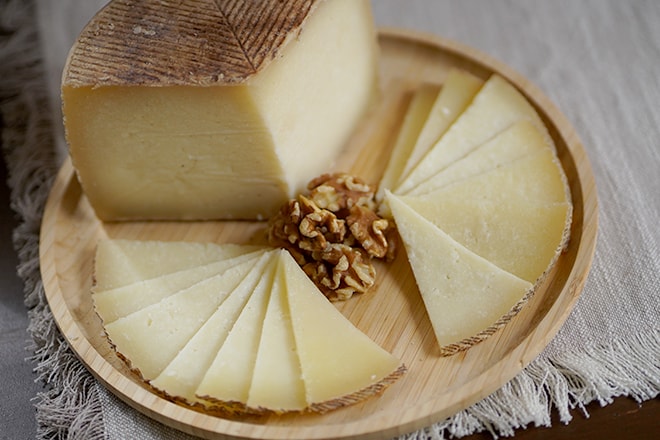
Manchego Cheese in South Korea: A Guide for Importers
Why Spanish Manchego is gaining ground in South Korea, how to position it on shelf, what buyers want, and how to import and price it for margin.
Autor: Ispalo
Publicado: 2026-10-31
What is driving Manchego demand in South Korea? Spanish Manchego is moving from a niche import to a viable premium line in South Korea's cheese case. The pull comes from three places: a retail sector that rewards differentiated European origin, a foodservice scene that uses cheese as a signature ingredient, and a shopper who reads labels for provenance. None of this means Manchego will outsell processed slices. It means a well-priced, well-placed Manchego can hold a premium slot that generic cheese cannot. The global cheese category has deep roots, and that history matters when you sell origin. Cheese is an ancient food whose manufacture spread across Europe over centuries. Korean buyers are not new to cheese, but they are new to the idea of a specific Spanish sheep's-milk cheese with a protected name. That is the gap an importer can fill. How is Manchego positioned on the Korean shelf? Manchego does not sit with everyday sliced cheese. It belongs in the chilled premium section, near imported hard cheeses, and in the gift and entertaining set. The shelf logic is simple: a shopper who picks up a wedge of Manchego is buying a story and a texture, not a sandwich filler. That shopper will pay more per gram than for a domestic processed cheese, and will compare it with other European imports, not with a local brand. Pricing discipline is where most importers lose margin. Without a clear price ladder, Manchego gets marked down to move volume and the premium signal collapses. The Ispalo price index for this market shows how Korean retail handles premium imported foods: a 355 ml imported organic energy drink sits at 3,500 to 4,500 KRW, while a mainstream energy drink unit is around 2,500 KRW. The gap is roughly 40 to 80 percent. That is the kind of premium band a differentiated import can hold when it is positioned as a specialty, not as a commodity. For cheese specifically, the index does not list Manchego, so treat the energy-drink band as a positioning benchmark, not a p
Sigue leyendo en el Atlas
Preguntas frecuentes
Is Manchego already sold in Korean retail?
It is present in the imported cheese section of premium grocery, but it is not a mainstream line. The opportunity is to build the category rather than fight for share in a crowded one.
What price band should I target for Manchego in Korea?
There is no published Manchego price in the Ispalo index. Use the premium import band as a benchmark: differentiated imports in Korea sit roughly 40 to 80 percent above mainstream equivalents, as the energy-drink data shows. Set your retail price from that band, not from a discount.
Does the EU-Korea FTA help Manchego importers?
Yes. The agreement has been in force since 2011, and it reduces or eliminates tariffs on EU food imports. Confirm the specific tariff line and origin documentation with your customs broker before you commit to a landed cost.